Lupin gets USFDA warning For Goa And Pithampur plants
Lupin has received warning letter from the US Food And drug Administration for its Goa and Pithampur Unit 2 plant indicating a continued regulatory concerns for the Drug maker. Last week Lupin gains 1% on USFDA Approval to launch tablets in US market.
The Lupin stock fell avg. 15% in intraday Trade to Rs. 848 after the company notified the exchange about the warning letter. While the company can continue to supply existing product to the US market, fresh approval will be delayed.
The company earlier had received 3 Form 483 observations in Goa on April 7, 2017 and 6 Form 483 observations in Pithampur (Unit II) on May 19, 2017.
The company had responded to all the observations.
“We are deeply disappointed to have received these outcome. While there will be no disruption of existing product supplies from either of these locations, there will be likely to be delay on new product approvals from these two facilities, company said in release.
We plan to address the concerns raised by the USFDA expeditiously and will work with USFDA to resolve these issues at the earliest, it added.
Vaastu Vision Band Baja Barat Event Nagpur – Wedding in India are classic and celestial celebration that need precise planning and meticulous attention to almost every detail. The first edition BAND BAJA BARAT Show of Vaastu Vision Group, promises to help couples achieve their big, perfect day.
VASTU VISION is a trusted name in central India for fairs and exhibitions. This exhibition offers an ideal platform to brands to exhibit, promote, transact and grow. It is a highly cost-effective and strong marketing platform for organizations to connect with the large section of the target audience.
This time Nagpur will showcase almost everything needed to plan a wedding. One stop exhibition for all kinds of wedding services & accessories, For every would be bride and groom who are looking for trendy fashion clothes and accessories.This exciting, exclusive and elegant event will open up vast opportunities for brides, grooms, and families to interact with a large range of service providers in an aura of sophistication and merriment. This impeccably managed wedding show will offer signature visual design and a consistent introduction to new and unique specialists.
Also Check : 5th Annual Nagpur Wine and Food Festival is Coming Up. Venue :
Nagpur continues to be a commercial hub of central india thanks to the ever improving communication network,be it road,rail or air to this second capital of Maharashtra. The industrial growth has ensured all round development of the city. In short an almost perfect venue to showcase your products.
DATE – 17 Nov to 19 Nov 17
LOCATION – South Central Zone Cultural Zone, Nagpur
This December, a Nagpur wine and food festival is coming to orange city Nagpur.
The Nagpur Wine Lover’s Club under the flagship of Nagpur Agro Development Association is proud of being the only wine club in Central India that was established in 2011 by 11 founder members has now strength of 244 members.
1 of 6
Nagpur Wine and Food Festival
Nagpur Wine and Food Festival
Nagpur Wine and Food Festival
Nagpur Wine and Food Festival
Nagpur Wine and Food Festival
Nagpur Wine and Food Festival
As the club gained popularity the idea to conduct a wine festival dawned and the first wine festival was conducted in 2013. Since then it is a much awaited and regular event. This festival attracts on an average 2000 to 2500 wine lovers from the city and from Vidharbha, Chattisgarh and Madhya Pradesh.
The club announces its fifth edition of this Nagpur Wine and Food festival on 2nd and 3rd of Dec, at the alluring Woods Lawn in the prestigious CP Club Civil Lines. This year’s event boasts of 6-8 leading wineries of India to participate and showcase their wine variants with noticeable and distinctive aromas namely…
Sula, Grover Zompa, Fratelli, Rio, Sway, Pause, Four Seasons, Nine Hills and Rhythm winery.
To team with the wine tasting and consumption, exotic food courts will be serving different cuisine like Continental, Tandoor, Parsi, Chettinad, Goan, CKP cuisine etc… with tantalizing tastes.
The event will be inaugurated on 2nd Dec by Mr.Shailendra Pai from Vallonne Vineyards. Exclusive wine stomping event for ladies has been arranged. The festival attractions include – An exclusive exotic wine cocktail bar (AC) that will be set up in the event and a Live band playing instrumental music will be arranged during evening hours from 7pm to 10pm to entertain and enthrall the guests.
For the visitors and the wine lovers all the participating wineries extend promotional schemes.
The event management is by Ms Reema Sial (Celebration Events) and Digital Media Promotion managed by Mr. Kunal Tayade (SOFTACORE).The festival committee comprising of members,
President: Mr. Sharad Phadnis, Vice President: Mr. Sudhir Kunte, are taking efforts and ensuring to make this event a grand success.
The Indian women’s hockey team has reached the finale of the 2017 Women’s Hockey Asia Cup, defeating hosts and defending champions Japan 4-2 in a closely fought semi-final in Kakamgigahara on Friday. The Indian eves have now set up a summit clash with China.
Goals from Gurjit Kaur (7th, 9th minutes), Navjot Kaur (9th) and Lalremsiami (38th) underlined India’s victory, which took them to a fourth Women’s Hockey Asia Cup final; India won the title in 2004 and finished runners-up in 1999 and 2009.
Rani Rampal’s team will face China in the final on Sunday, after having beaten them 4-1 in the league stage just a few days ago.
They secured a win against Kazhakstan courtesy a hattrick by Gurjit Kaur while Navneet Kaur and Deep Grace scored two goals each for the team.
India has been in rich goalscoring form all through the tournament. India started their campaign with a 10-0 rout over Singapore. They then went on to trounce China 4-1 and rounded off their group engagements with a 2-0 win over Malaysia to top the group.
India, who will be playing their fourth final, won the title in 2004 and finished runners-up in 1999 and 2009. China have won the Asia Cup twice, in 1989 and 2009. In the 2009 final, China beat India 5-3. The winner of the 2017 edition will qualify for the 2018 World Cup in England.
Hidden Chamber Found in Egypt’s Great Pyramid, In an article published in the journal Nature on Thursday, an international team said the 30-meter (yard) void deep within the pyramid is situated above the structure’s Grand Gallery, and has a similar cross-section.
The purpose of the space is unclear, and it’s not yet known whether it was built with a function in mind or if it’s merely a gap in the pyramid’s architecture. Some experts say such empty spaces have been known for years.
“This is a premier,” said Mehdi Tayoubi, a co-founder of the ScanPyramids project and president of the Heritage Innovation Preservation Institute. “It could be composed of one or several structures… maybe it could be another Grand Gallery. It could be a chamber, it could be a lot of things.”
The scientists made the discovery using cosmic-ray imaging, recording the behaviour of subatomic particles called muons that penetrate the rock similar to X-rays, only much deeper. Their paper was peer-reviewed before appearing in Nature, an international, interdisciplinary journal of science, and its results confirmed by other teams of scientists.
Chances of the space containing treasure or burial chambers are almost nil, said Aidan Dodson, an Egyptologist at the University of Bristol, but the discovery helps shed light on building techniques.
“The pyramid’s burial chamber and sarcophagus have already been discovered, so this new area was more likely kept empty above the Grand Gallery to reduce the weight of stone pressing down on its ceiling,” he said, adding that similar designs have been found in other pyramids.
Egypt’s former antiquities minister and famed archaeologist Zahi Hawass, who has been testing scanning methods and heads the government’s oversight panel for the new techniques, said that the area in question has been known of for years and thus does not constitute a discovery. He has long downplayed the usefulness of scans of ancient sites.
“The Great Pyramid is full of voids. We have to be careful how results are presented to the public,” he said, adding that one problem facing the international team is that it did not have an Egyptologist as a member. He said the chamber was likely empty space builders used to construct the rooms below.
“In order to construct the Grand Gallery, you had to have a hollow, or a big void in order to access it — you cannot build it without such a space,” he said. “Large voids exist between the stones and may have been left as construction gaps.”
The pyramid is also known as Khufu’s Pyramid for its builder, a 4th Dynasty pharaoh who reigned from 2509 to 2483 B.C. Visitors to the pyramid, on the outskirts of Cairo, can walk, hunched over, up a long tunnel to reach the Grand Gallery. The space announced by the scanning team does not appear to be connected to any known internal passages.
Scientists involved in the scanning called the find a “breakthrough” that highlighted the usefulness of modern particle physics in archaeology.
“It was hidden, I think, since the construction of the pyramid,” Tayoubi added.
The Great Pyramid, the last surviving wonder of the ancient world, has captivated visitors since it was built as a royal burial chamber some 4,500 years ago. Experts are still divided over how it and other pyramids were constructed, so even relatively minor discoveries generate great interest.
Late last year, for example, thermal scanning identified a major anomaly in the Great Pyramid — three adjacent stones at its base which registered higher temperatures than others.
Speculation that King Tutankhamun’s tomb contains additional antechambers stoked interest in recent years, before scans by ground-penetrating radar and other tools came up empty, raising doubts about the claim.
The muon scan is accomplished by planting special plates inside and around the pyramid to collect data on the particles, which rain down from the earth’s atmosphere. They pass through empty spaces but can be absorbed or deflected by harder surfaces, allowing scientists to study their trajectories and discern what is stone and what is not. Several plates were used to triangulate the void discovered in the Great Pyramid.
While the technology can detect large open spaces, it cannot discern what is inside, so it’s unclear if the empty space contains any objects. Tayoubi said the team plans now to work with others to come up with hypotheses about the area.
“The good news is that the void is there, and it’s very big,” he said.
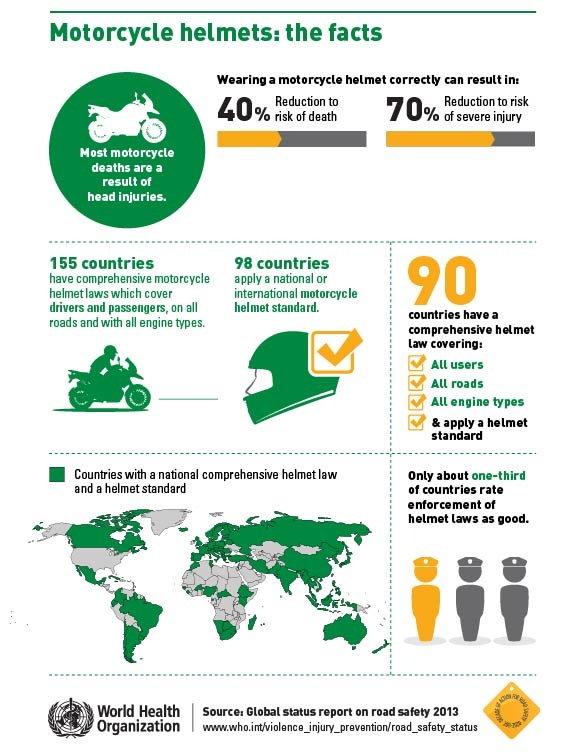
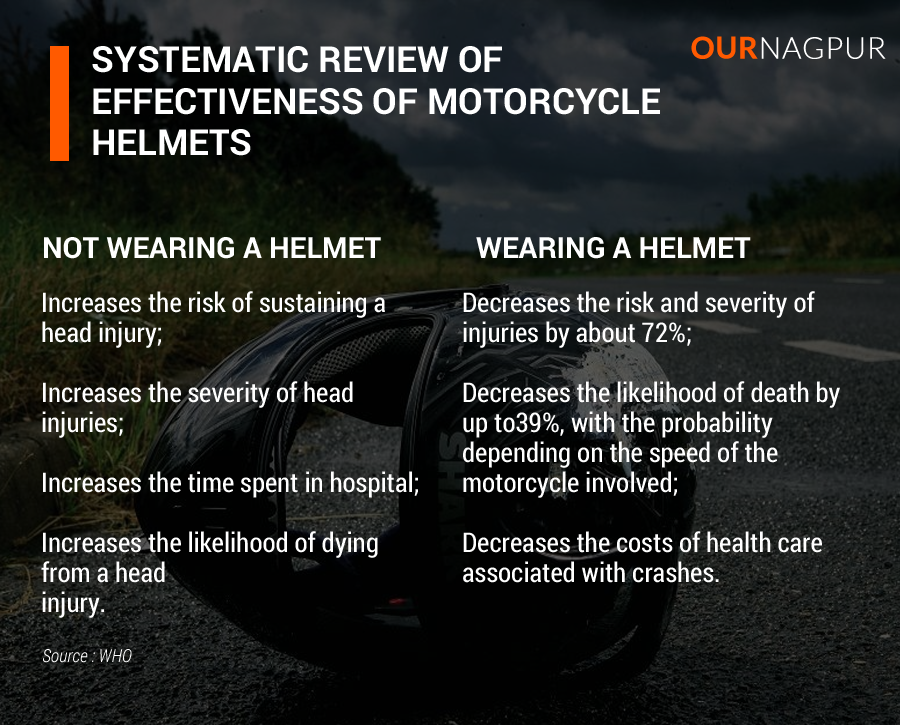
Here is Road traffic injuries are a major public health problem and a leading cause of death
and injury around the world. Read Interesting Facts about Motorcycle Helmet, Each year nearly 1.2 million people die as a result of road crashes, and millions more are injured or disabled
(1). In many low-income and middle-income countries, where motorcycles and bicycles are an increasingly common means of transport, users of two-wheelers make up a large proportion of those injured or killed on the roads. Motorcycle and bicycle riders are at an increased risk of being involved in a crash. This is because they often share the traffic space with fast-moving cars, buses and trucks, and also because they are less visible. In addition, their lack of physical protection makes them particularly vulnerable to being injured if they are involved in a collision. In most high-income countries, motorcycle fatalities typically comprise around 5% to 18% of overall traffic fatalities
(2). This proportion reflects the combined effect of several important factors including the relatively low ownership and use of motorcycles in many developed countries, and the relatively high risk of these motorcycles being involved in crashes involving fatalities. Typically, these risks are much higher for motorcycle than for vehicle travel
Head injuries are a leading cause of death and disability
Injuries to the head and neck are the main cause of death, severe injury and disability
among users of motorcycles and bicycles. In European countries, head injuries
contribute to around 75% of deaths among motorized two-wheeler users; in some
low-income and middle-income countries head injuries are estimated to account for
up to 88% of such fatalities. The social costs of head injuries for survivors, their
families and communities are high, in part because they frequently require specialized
or long term care. Head injuries also result in much higher medical costs than
any other type of injury , such that these injuries exert a high toll on a country’s
health care costs and its economy. Read Global status report on road safety 2015
A helmet protects your head
The technical expertise behind the design of high quality helmets is based on an
understanding of what happens to the head in the event of a motorcycle crash. This
section describes what happens in the event of a motorcycle crash, and then explains
how a helmet works to reduce this effect.
The mechanism of head injuries
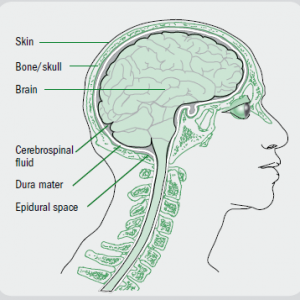
The brain is enclosed within a rigid skull.
The brain “sits” on bones that make up the base of the skull.
The spinal cord passes through a hole in the underside of the brain.
Under the skull, adhering to the bones, is a tough tissue called the dura that surrounds the brain.
Between the brain and the dura is a space containing cerebrospinal fluid that protects the brain tissue from mechanical shock.
The brain “floats” in the cerebrospinal fluid but it can only move about 1 millimetre in any direction.
The skull is covered by the scalp, which provides some additional protection.
During a motorcycle or bicycle crash there are two principal mechanisms of injury
to the brain: through direct contact and through acceleration–deceleration.
Each mechanism causes different types of injuries. When a motorcycle or bicycle is involved in a collision, the rider is often thrown from the cycle. If the rider’s head hits an object, such as the ground, the head’s forward motion is stopped, but the brain, having its own mass, continues to move forward until it strikes the inside of the skull. It then rebounds, striking the opposite side of the skull. This type of injury can result in anything from a minor head injury, such as concussion, to a fatal head injury.
How a helmet works
A helmet aims to reduce the risk of serious head and brain injuries by reducing the
impact of a force or collision to the head.
A helmet works in three ways:
It reduces the deceleration of the skull, and hence the brain movement, by managing
the impact. The soft material incorporated in the helmet absorbs some of the
impact and therefore the head comes to a halt more slowly. This means that the
brain does not hit the skull with such great force.
It spreads the forces of the impact over a greater surface area so that they are not
concentrated on particular areas of the skull.
It prevents direct contact between the skull and the impacting object by acting as a
mechanical barrier between the head and the object.
Motorcycle helmet design
Materials used in the construction of a helmet should not degrade over time, or
through exposure to weather, nor should they be toxic or cause allergic reactions.
Currently, the plastic materials commonly used are Expanded Poly-Styrene (EPS),
Acrylonitrile Butadiene Styrene (ABS), Poly Carbon (PC) and Poly Propylene
(PP). While the material of the helmet shell generally contains PC, PVC, ABS or
fibre glass, the crushable liner inside the shell is often made out of EPS – a material
that can absorb shock and impact and is relatively inexpensive. However, helmets
with EPS liners should be discarded after a crash, and in any case users should
replace such helmets after 3–5 years of use.
Standards often set the minimum coverage of a helmet (see Module 3). Half-head
helmets offer minimal coverage. Full-face helmets should ensure that the wearer’s
peripheral vision and hearing are not compromised.
To ensure that a helmet can absorb the shock of a crash, the crushable liner should
be between 1.5 cm and 3.0 cm in thickness.[amazon_link asins=’B00OJZOBRA,B013NCSEF4,B00NQ2RQXI,B01MSYN3ZD,B00NXFPUYU’ template=’ProductCarousel’ store=’ourngpnew-21′ marketplace=’IN’ link_id=’ad9c74a7-c05e-11e7-8d82-bbc087b28d47′]
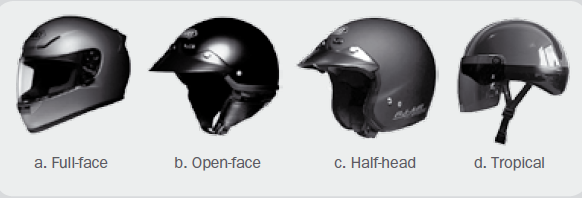
In addition to the previously mentioned design issues, there are also various styles of
helmets which afford different protection.
The Confederation of All India Traders (CAIT), a body that represents traders and small businesses, on Thursday demanded the Centre order a Central Bureau of Investigation inquiry against companies entrusted with running the GST portal. “The GST portal is a work in progress even four months after the roll-out of the new tax regime. It has caused mental torture to traders,” CAIT Secretary-General Praveen Khandelwal said. The association of traders blamed Infosys for the glitches. The IT services firm has vehemently denied any negligence on its part.
In another development, trade bodies and sales tax lawyers on Thursday took up with the finance ministry the problems they are facing on account of “glitches” in the GST Network. A delegation of the Gujarat Sales Tax Bar Association, Ahmedabad, met Finance Minister Arun Jaitley on the “recommendations of Gujarat Chief Minister Vijay Rupani”.
According to GSTBA, the delegation drew Jaitley’s attention towards “glitches and non-working” of GSTN, and other related issues that taxpayers and tax professionals were facing. It requested simplification of compliance procedures in filing GST returns and forms. Gujarat votes next month and there have been protests in the wake of GST implementation. The association said Jaitley met them for 30 minutes.
HCL Technologies Nagpur will start its business operations at Nagpur campus from the first week of April 2018, a senior company official said here.
Training of the first batch of recruits is currently underway and the business operations will commence from the first week of April with 200 people, said senior vice president of HCL Technologies Sanjay Gupta here.
He was addressing reporters on the sidelines of HCL Foundation CSR Symposium on ‘Socio-Economic Developmental Challenges and Solutions’.
The HCL Nagpur campus will have a capacity of 2,000 people.
Gupta also informed about a unique Early Career Programme (ECP) for 10+2 passed students who are financially poor.
Under this programme, the selected students will be given 12 months training and later absorbed by the company. The first batch of such trainee students will start at HCL Lucknow campus from May 1, he said, adding, this initiative will be implemented in other campuses as well.
Director CSR – Head HCL foundation Nidhi Pundhir briefed about the development projects currently underway.
The work on three stations of Nagpur Metro at grade stretch is going on in full swing, which is expected to be completed by coming month. The basic structure of these stations is complete and the work on interiors is underway.
Mahametro managing director Brijesh Dixit had taken media on a visit to the three stations at Khapri, New Airport and Airport South on Wednesday. He said another visit would be arranged on December 5 and the stations will be completely ready by then.
Khapri airport’s Victorian architecture is based on Bandra suburban station in Mumbai. It will have red roof with terracotta tiles, white-coloured steel trusses and a clock tower. The station will have commercial space of about 15,000 square feet, which will house shops and restaurants. A large number of paintings and sculptures will adorn the interiors of the station. The artworks will reflect the heritage and culture of Nagpur, Vidarbha, Maharashtra and India.
Mahesh Kumar, director (project) of Mahametro, told the media, “In order to connect Khapri with Wardha Road, Mahametro is building a subway under the main railway line. Permission has been sought from Central Railway for this purpose. The station will have parking space for 30 cars and 100 two-wheelers. The Metro station will be integrated with Khapri railway station.”
New Airport Metro Station based on Buddha theme
Nagpur Metro’s New Airport Metro Station will connect with the proposed new Dr Babasaheb Ambedkar International Airport Station. The State-of-Art building of this station will be based on the theme of Lord Buddha. A 8 ft statue of Lord Buddha and a dome on the lines of historic Sanchi Stupa will be the main attraction of the station. Stainless steel is being used to create a shining dome. The station will be connected with Wardha road through a flyover and a sub-way in a distance of 150 meters. This station will cater to the need of Chinchbhuvan residents. MIHAN is constructing a huge road in this area to connect new proposed airport and Nagpur metro station. The Metro has used sand stone on the walls. The state-of-art furniture will improve the beauty of the station. The metro is acquiring a land on Wardha road for the parking bay and also developing a parking near its station.
Khapri Metro Station – Gateway to MIHAN
Khapri Metro Station is the last station of Nagpur Metro. The theme of this station building is based on Victorian Architecture. The platform of the station is 70 meter long and has a ticket counter, AFC, Cafeteria, washrooms, parking and WiFi facilities. The station will have a huge clock tower. The Khapri station and other stations will be having murals and beautiful art work. The station is also connected with the Wardha road. This may be called as “Gateway of MIHAN’. The station will be having a commercial space spread over 15,000 sq ft area. It will have a multimodal transport hub connecting MIHAN with the Nagpur Metro.
Video walls for social messages
Sunil Mathur, Director (Rolling Stock) said, every station will have huge video walls of LeD screens. These video walls will be used for spreading social messages as well as for commercial earnings. The distance between platform and train is only 80 mm to avoid any unpleasant mishap. The Metro has taken care to protect its railway track from solar fencing and a wall along 5 kms to avoid any untoward incident. The railway tracks are imported from Russia while concrete sleepers are being brought from Bhopal. Presently, the train will be running at a speed of 35 kms per hour. The train has a capacity of 900 passengers in three coaches. Every coach has 2 ACs each with 45 tonnes capacity. The wheel chair will be available for physically challenged persons. Special arrangements have been made for blind, senior citizens persons. S Shivamathan, Director (Finance), Anil Kumar Kokate, General Manager (Admin), Janak Kumar
Garg, CPM Rolling Stocks, H P Tripathi, CPM PS, and others were present.
Popular adult star Mia Khalifa is all set to make her maiden steps into the Indian film industry soon. She has been approached to play a part in the upcoming Malayalam adult-comedy Chunkzz 2: The Conclusion, which is a sequel to this year’s Mollywood blockbuster Chunkzz, reports manoramaonline.com.
Speaking to the publication, the film’s director Omar Lulu confirmed the development and said that Mia will have a character role apart from an item dance in the film. He also added that a final round of discussion is left before Mia officially comes on board for the project.
Actress Honey Rose, who was the female lead in the 2017 film, will reprise her role in the upcoming film as well. Screenwriters Sarang and Sanoop Thykoodam, who wrote Chunkzz’s script will also reportedly pen the script for the sequel. Any other details pertaining to the cast for this film is not yet available.
Mia Khalifa will be the second adult star from USA after Sunny Leone to enter Indian showbiz. Khalifa currently hosts a sports show for a YouTube channel. Omar Lulu is all set to start shooting for his upcoming film Oru Adaar Love in December, following which he would commence filming Chunkzz 2: The Conclusion, which is slated to go on floors in May 2018, adds the Indian Express report.
However, several reports have emerged lately claiming that Khalifa is not doing the film; in fact she will not step into the film industry at all.
THE 82ND Senior Nationals Badminton Championship, under the auspices of the Badminton Association of India (BAI), will be hosted by Maharashtra Badminton Association (MBA) in Nagpur from tomorrow.
The Senior Nationals Badminton Championship will be held after 25 years in the Orange City from 2nd November – 8th November, 2017 at the Divisional Sports Complex, Mankapur. The total prize money announced by Badminton Association of India (BAI) for the event is Rs. 60 lakhs – the highest ever in the history of the Senior Nationals. The Championship will be broadcasted live on Doordarshan and All India Radio.
The preparation for the mega event is completed and the city is all geared up to welcome more than 450 players from 29 states and 2 union territories. Dr. Himanta Biswa Sarma, President – BAI, in his vision and quest to make India a world superpower of badminton by the next Olympic Games, has ensured top player participation in the domestic circuit. The championship will see top Indian shuttlers like P.V. Sindhu, Saina Nehwal, Srikanth Kidambi, Ashwini Ponnappa, HS Prannoy and Ajay Jayaram battle it out to gain top billing.
Below are the prize money details announced by BAI:
Mens & Womens Singles
Doubles Pair
Team Events
Pre-Quarters- 50,000
Quarter-finalists- 75,000
75,000
Semi-finalists- 1,00,000
1,00,000
1,00,000
Runner-up: 1,50,000
1,50,000
3,00,000
Winner- 2,00,000
2,00,000
5,00,000
Mr. Arun Lakhani, President, Maharashtra Badminton Association said, “We are delighted to be hosting the 82nd Senior Nationals Badminton Championship in Nagpur and thank BAI President Dr. Sarma, for bestowing this honor to us. The Orange City is all set for badminton’s biggest annual event and it’s a huge opportunity for fans to watch their favorite players in action. Many Indian players in top 50 of the Badminton World Federation (BWF) rankings will be participating. The Mankapur Sports Complex is ready for this mega event as we want the fans and the players to have a first-of-its-kind world class experience. With 5 events (Men’s & Women’s Singles, Men’s & Women’s Doubles and Mix Doubles) and team championship, I am sure this will be a treat to watch”, he added.
The Maharashtra Badminton Association will also felicitate two veterans Mr. Pradeep Gandhe and Mr. C D. Deoras for their immense contribution in the field of badminton in the state of Maharashtra.
The players who have got direct entry into the pre quarter finals and quarter finals are:
Men’s doubles: Satwiksai/Chirag, Manu Attri/Sumeeth Reddy, Arjun MR/Shlok Ramchandran, Top Pair from latest BAI ranking
Women’s doubles: Ashwini Ponnappa/Sikki Reddy, Sanajana Santosh/Aarthi Sara Sunil, Jakkampudi Meghana/Poorvisha Ram, Top Pair from latest BAI ranking
Mixed doubles: Pranaav Jerry Chopra/Sikki, Ashwini/Sumeeth, top pair from latest BAI ranking, second top pair from BAI ranking.
The rousing action will kick-start on 2nd November, 2017 with an extravagant Opening Ceremony and the Grand Finale will take place on 8th November, 2017. From 2nd of November till the finals 22,000 school kids from Nagpur will also witness the actions live in the Divisional sports complex. While Indian badminton players are engraving their names across the world, the Senior National Championship will bring together India’s top badminton players wherein they will showcase high-class action in front of sports lovers.
It’s been two years since Yamaha Motobot challenged MotoGP GOAT Valentino Rossi to a lap time duel. And now, the race has been run, at California’s Thunderhill raceway.
Humans have been getting their tails handed to them by computers. A.I. has been regularly trouncing humanity in classic games like chess, Go, and Mortal Kombat for years now. But there’s one area where we still reign supreme (for now): motorcycle racing.
The Yamaha MOTOBOT project began in 2015 with the goal of an A.I. driving a motorcycle “with no modifications made to the motorcycle itself.” MOTOBOT controls six actuators on the bike: the steering wheel, throttle, front brake, rear brake, clutch and gearshift pedal. As a test for the ambitious project, Yamaha and partners SRI International gave themselves an equally ambitious goal: MOTOBOT beating MotoGP racer Valentino Rossi.
Rossi, a coworkers of the researchers while racing for Movistar Yamaha MotoGP, has won a remarkable 89 out of the 301 races he has been in professionally. Make that 90 as he smoked Yamaha MOTOBOT.
Check Out: Auto Expo 2018 to be held between February 9-14.
Of course, Yamaha MOTOBOT is actually performing quite well. The computer, after three years of trials, has a much greater understanding of motorcycle racing than an amateur would. Yamaha hopes that by 2020, they’ll have gleaned enough from MOTOBOT to “deliver new value from Yamaha to our customers,” according to their website. While Rossi sounds eager for a rematch, it appears that Yamaha will settle for second place as long as the average, non-racing customer can glean some real driving benefits from MOTOBOT, in which case we all win.
And while Rossi beat the metal pants off a 2 year old Motobot, how much money would you put on the fleshy GOAT in five years’s time? What about 10? Food for thought. Enjoy an explanation of some of the tech inside Motobot and the thinking behind the project in a second, longer video below:
Virat Kohli made his ODI debut back in 2008. In the past nine years of his cricketing career, he has not taken a break citing personal reasons. But now he’s called for it.
INDIA SKIPPER Virat Kohli has cited ‘personal reasons’ and asked for a break during the upcoming Sri Lanka tour.
Starting with the longer format, India is scheduled to play three Tests, three ODIs and three T20s against Sri Lanka between November 16 and December 24. It is learnt that if Kohli receives thumbs up, India will play entire ODI and T20 series in his absence. As reported by Indian Express, a BCCI official divulged,
“Kohli has informed the BCCI that there are some personal reasons and that is why he won’t be available in the month of December. Kohli has been playing non-stop cricket for quite sometimes now and he certainly would like to be fresh for South Africa tour in January.”
will play its lone warm-up game on November 11 in Kolkata & India Vs Sri Lanka VCA Nagpur Test starting November 24.
Men who eat alone have a 45 per cent greater risk of developing obesity, a new study has found.
Researchers at Dongguk University Ilsan Hospital in Seoul, South Korea also found links between eating alone and high blood pressure and high cholesterol.
While their findings revealed health consequences for both men and women who dined solo, the effects were far more prevalent in men.
The study examined 7,725 adults who were asked to state how often they ate on their own.
They found that dining habits posed health threats for those who ate alone more than twice a day.
Scientists also found that these individuals were more likely to be single, live alone and skip meals.
Men who ate alone more than twice a day were the most likely to develop abdominal obesity; typically these men did not have spouses.
Published in Obesity Research & Clinical Practice, the study showed that men who ate on their own also were 64 per cent more likely to develop metabolic syndrome, which is a combination of diabetes, high blood pressure and obesity.
Meanwhile, women who regularly ate alone were 29 per cent more likely to contract metabolic syndrome.
A dangerous condition, metabolic syndrome puts you at greater risk of coronary heart disease and stroke, according to the NHS.
The study was inspired by findings which showed that households are getting smaller and more people are living alone than ever before.
FOR the prosperity and development of farmers, central India’s biggest agriculture exhibition Agrovision Agro Summit will be organised from November 10 to 13 at Reshimbagh Ground.
This was announced by Nitin Gadkari, Union Minister for Road Transport, Highways and Shipping and Ganga Rejuvenation, Water Resources, while talking to the media on Saturday.
Agrovision Agro Summit will be inaugurated at the hands of Devendra Fadnavis, Chief Minister of Maharashtra on November 10, in the presence of Nitin Gadkari, Chief Patron of Agrovision and other dignitaries.
On the occasion, Gadkari launched the Agrovision App which will provide all details of the Agrovision Summit.
Agrovision Agro Summit in its 9th edition would focus on bamboo cultivation, silk, fisheries, honey, dairy farming, etc. Agrovision aimed at increasing farmers’ income by imparting knowledge, training and introducing them to new and innovative farm technologies. Renowned experts would conduct workshops and give their valuable inputs in more than 21 topics including Surplus Management, Gadkari said.
Also Read : Rafale production to start at Nagpur plant from January 2018.
More than 400 national and multinational companies, agri companies, research institutes, financial institutes, agriculture colleges, State Government Agriculture Department, service providers, etc. would be part of Agrovision. One of the main attractions would be the livestock pavilion where large varieties of hybrid animals would be available. Information on water management, dairy business, poultry farming, fisheries, bee management, better crop production management, solar power etc., would be discussed in the conference, he stated.
Gadkari said that students and farmers would be selected by the Agrovision Foundation Expert Committee and Rs 1 lakh consolidated aid would be provided to students and farmers who invent new technology in agriculture.
Ramesh Mankar, Organiser Secretary of Agrovision, Girish Gandhi, Foundation Organiser, Datta Meghe, former MP, Devendra Parekh, President of VED and others were prominently present on the occasion.
Reliance Defence is gearing up for the take-off of its Rafale jets manufacturing plans. In his first TV interview, the firm’s CEO Rajesh Dhingra told CNBC-TV18’s Rituparna Bhuyan that Reliance Defence plans to start production at its Dassault Reliance Aerospace (DRAL) facility in Nagpur by January 2018.
Subramanian Swamy, BJP Rajya Sabha MP, on Tuesday, hit out at the compulsory Aadhar, saying it was a threat to India’s national security. Swamy said he will soon write to the PM and hoped that the Supreme Court will strike it down.
“I am writing a letter soon to PM detailing how compulsory Aadhar is a threat to our national security. SC will I am sure strike it down,” Swamy tweeted.
On Monday, Supreme Court had said that a Constitution bench will start hearing a batch of petitions challenging Modi government’s move to make Aadhaar card mandatory for availing several services and benefits of government welfare schemes from the last week of November.
The SC bench comprising Chief Justice Dipak Misra and Justices A M Khanwilkar and D Y Chandrachud said this after Attorney General K K Venugopal told the court the Centre was ready to argue in the matter and that no interim order was required to be passed without hearing him in the case.
Also Read : UPSC : Google drive, bluetooth, micro camera: Safeer Karim IPS officer cheat in exams. Appearing for one of the petitioners challenging the government’s move, Senior advocate Gopal Subramanium told the bench that the apex court had earlier passed several orders in the Aadhaar matter and observed that it was “purely a voluntary act”, and there would not be any compulsion for the citizens to have the card to receive benefits of the governments schemes.
I am writing a letter soon to PM detailing how compulsory Aadhar is a threat to our national security. SC will I am sure strike it down.
Deadline extended
The Centre had told the apex court last week that it had extended the deadline for mandatory linking of Aadhaar to avail benefits of government schemes to March 31, 2018. The previous deadline was December 31, 2017.
Swamy Vs Centre?
This is not the first time when Swamy had taken a stand against the Centre, even as the latter is pushing hard to make it compulsory for all schemes and services. Recently, Swamy had warned that the economy was headed towards a slowdown. Swamy’s claim led to a flurry of similar claims by several politicians and experts.
The illustrious civil services are a dream for countless people across the nation, and aspirants spend years of their lives preparing for the challenging exams, but one Tamil Nadu-cadre trainee Safeer Karim IPS officer cheat in exams a short-cut on the written exam and was sent to judicial custody by a magistrate on Tuesday.
Safeer Karim, currently an assistant superintendent of police in Nanguneri, Tirunelveli, was arrested by the police on Monday after Intelligence Bureau (IB) officers caught him cheating during the UPSC Main examination at a test centre in Chennai, by using a cellphone, a Bluetooth enabled miniature camera and wireless earpieces.
Karim used a micro camera mounted on his chest and connected to Google drive. The camera would scan the paper and send through Google drive to the intended recipient, in this case, his wife Joicy Joyce who was in Hyderabad. Joyce would give the answer orally, which would reach him through Bluetooth. If the voice was not audible, he would write on a paper with a pencil, which he would scan again and send to his wife. She would then speak louder.
Also Read : skyTran – What Is Pod Cars ? How it works and what is benefits ?
The IB had suspected that Karim had cheated in the first of the 5 UPSC tests on Saturday and had put him under surveillance as well as his wife and made coordinated arrests along with the Hyderabad police when the cheating paraphernalia were recovered.
“Karim handed over his wallet and a cellphone to them from his trouser pockets, apologizing for forgetting to leave the handset in his car. But he had concealed another phone and wireless earpieces in his socks and a miniature camera in his shirt,” an officer said.
Twenty minutes after the examination began, 4 IB sleuths searched Karim once again and seized the second phone, earpieces and miniature camera.
The IB officers handed Karim over to the police on Monday who booked him from the relevant sections of the IPC, including 420 (cheating and dishonesty) and 120b (criminal conspiracy), and under provisions of the IT Act and took him into custody. Karim was later presented in front of a magistrate on Tuesday who sent him to judicial remand.
Hailing from Aluva in Kerala, Karim who had ranked 112 in his second attempt at the UPSC exams in 2015, took the UPSC exams again as he wanted to become an IAS officer.
Indian Movie Posters That copied from Hollywood, There are originals, inspirations, rip-offs and blatant copies. Filmmakers have always been inspired by their peers from elsewhere around the globe. Some just take it to a whole new level.
Here is Indian movie posters that are ‘inspired’ from Hollywood.
Prabhas’ Saaho Vs Blade Runner 2049Murder 2 Vs Anti ChrisRaone vs Batman BeginsRowdy Rathore vs The Replacement KillersLunchbox vs LooperBhoomi vs The Grey
Prabhas Saaho Vs Blade Runner 2049
Masss Vs The Bourne UltimatumVelaikkaran Vs Falling DownVelaiyutham Vs Assassin’s CreedThuppakki Vs An Officer and a GentlemanSindhu Samaveli Vs The Hills Have EyesMurder 3 Vs Jennifer’s BodyHulchul Vs Big Fat Greek Wedding
Being cramped up in spaces with no leg-room for up to six hours can be a torturous affair and can be especially challenging in long-duration flights. For now there is some respite for travellers who can scoop out a sizeable amount and some time for such journeys. Vikings Ocean Cruises is bringing two international cruises to and from Mumbai – Mumbai to Bangkok and Athens to Mumbai.
Mumbai to Bangkok cruise When: 8 September, 2018
Take the scenic route to Bangkok with the new “Across the Bay of Bengal” cruise. Think 16 days, 8 guided tours and five countries with overnights in Mumbai, Colombo and Bangkok. Take the Strait of Malacca to sample culinary and cultural delights in George Town and Kuala Lumpur in Malaysia. Spend a day in Singapore and explore coral reefs and temples in Koh Samui before hitting the markets of Bangkok. Aboard the Viking Orion, set to launch in July 2018, perks for everyone include balcony staterooms, guest lecturers and access to the thermal suite at the Scandi-style spa.
Must Check : 10 Little Known Countries That You Should Definitely Visit.
The Athens to Mumbai cruise is journey handcrafted for history buffs as the 21-day cruise will take the ancient trading route from Greece to India. The Viking Orion will navigate the Mediterranean Sea on what they call Passage to India. The journey will cover 9 guided tours and 6 countries. Passengers would be able to explore the ancient city of Athens, visit the hanging gardens of the ancient port-city of Haifa, the pyramids and the Sphinx in Egypt, while away time in the turquoise waters of Sharm-el-Sheikh, and explore the Frankincense Route of Oman before reaching the shores of Mumbai.
The Mumbai to Bangkok cruise is set to start from September 8, 2018 while the Athens to Mumbai is set the start from August 19, 2018.
It seems like Bollywood Golmaal Again Box Office Collection has landed itself a formula for a blockbuster movie – a collaboration between Ajay Devgn and Rohit Shetty. Golmaal Again is the duo’s tenth movie together. Six of their ten movies belong to the Golmaal and Singham franchises. All of these six movies have gone to become very successful at the box office, including Golmaal Again, which is still running strong in Indian and international theatres.
Golmaal Again Box Office Collection made Rs 87.60 crore on its opening weekend, becoming the highest opening Bollywood movie of the year, surpassed only by Baahubali 2.
#GolmaalAgain is UNSTOPPABLE… Will cross ₹ 150 cr mark today [Sat]… [Week 2] Fri 7.25 cr. Total: ₹ 143.33 cr. India biz.
Two weeks later, Golmaal Again is still going rather strong. Although the earnings have dropped to Rs 31.44 crore in the second week from Rs 136.08 crore in the first week, it still managed to pull up the earnings from India to Rs 167.52
That brings the worldwide Golmaal Again Box Office Collection to Rs 205.12 crore.
The box office earnings have come as very good news to the makers of Golmaal Again and a relief to Bollywood that has experienced a lot of disappointments in 2017. Although Golmaal Again did not receive very positive reviews from critics, audiences seem to be enjoying the movie.
Golmaal Again stars the original cast of Ajay Devgn, Arshad Warsi, Tusshar Kapoor, joined by Kunal Khemu and Shreyas Talpade for the second time, along with Parineeti Chopra and Tabu.
The Group of Ministers (GoM) on Sunday recommended GST rate cut under the GST composition scheme for manufacturers and restaurants to 1 per cent. Currently manufacturers are charged GST at 2 per cent while restaurants have to fork out 5 per cent and traders pay 1 per cent as tax. A senior official confirmed that the GoM headed by Assam Finance Minister Himanta Biswa Sarma has also recommended that the tax rate for AC restaurants should be lowered to 12 per cent from 18 per cent at present.
This would make tax rate uniform for AC and non-AC restaurants that are not covered under the composition scheme. Besides, the GoM has suggested that GST for hotels which have room tariffs of more than Rs 7,500 per night should be cut to 18 per cent from the current level of 28 per cent. The hospitality sector has been complaining of high rates hitting their business. The GST on restaurants in fivestar and luxury hotels had been earlier reduced from 28 to 18 per cent, bringing it at par with standalone air-conditioned restaurants. Food & beverages constitute 30-40 per cent revenue for five-star hotels.
However, it remains to be seen whether these restaurants are also brought into the 12 per cent bracket. GST composition scheme is open for manufacturers, restaurants and traders whose turnover does not exceed Rs 1 crore. This threshold was earlier Rs 75 lakh and the GST Council had this month raised it to Rs 1 crore from October 1 so that more traders and manufacturers could benefit from this scheme which is easy to comply with as it does not require much paperwork. The fixed tax also has to be paid on a quarterly basis instead of monthly as is the case with others.
Also Read :Government extends GSTR-2 & GSTR-3 to Nov 30 and Dec 11
With regard to traders, the GoM has suggested a twopronged approach for taxation under the scheme. It suggested that traders who want to exclude the sale proceeds of tax-free items from their turnover, can pay 1 per cent GST. However, those traders who pay tax on total turnover, the tax rate has been proposed at 0.5 per cent. The GoM also recommended allowing businesses which are engaged in inter-state sale to avail of the composition scheme, the official said.
At present such businesses are not allowed to opt for the simplified scheme. The government has drawn flak from the business community which has been complaining about filing GST returns as they are not familiar with digital processes. Some of these entities have never filed tax returns before. With several assembly elections around the corner, the government is keen that the economic reform, which is aimed at spurring growth, should not become a political liability.
Extending the ambit of the simpler GST composition scheme would help to smoothen ruffled feathers. Around 15 lakh businesses opted for composition scheme, which allows them to pay taxes at a concessional rate and makes compliance easy, under the Goods and Services Tax (GST) which rolled out from July 1. There are over 1 crore businesses registered under GST.
The GoM has also suggested that manufacturers engaged in job works can be allowed to opt for composition scheme, the official added. The GoM was set up earlier this month and was tasked with revisiting the tax structure of different categories of restaurants with the aim of rationalising or reducing the rates, apart from making composition scheme more attractive for businesses.
The other members of the GoM are Bihar Deputy Chief Minister Sushil Modi, Jammu and Kashmir Finance Minister Haseeb Drabu, Punjab Finance Minister Manpreet Singh Badal and Chhattisgarh Minister of Commercial Taxes Amar Agrawal.
The government has extended the last date for filing GSTR-2 & GSTR-3 for July 2017 to November 30 and December 11, 2017 respectively.
A notification in this regard is being issued shortly – to facilitate about 30.81 lakh taxpayers for filing GSTR-2 for month of July, 2017.
The last date for filing of final sales returns for July in GSTR-1 form was October 10, while the date for uploading of purchase returns in GSTR-2 was kept at October 31. This is now revised to November 30.
The final GSTR-3, matching GSTR-1 and 2, was to be filed by November 10, but is now revised to December 11.
“It is an excellent move to grant a further extension of the return filing timelines, which will enable many more taxpayers to become compliant,” says Deloitte India, Partner, MS Mani.
Over the weekend the ministerial panel chaired by Bihar Deputy Chief Minister Sushil Modi had flagged issues faced by taxpayers in filing GSTR-2. Taxpayers were facing difficulties in reconciling different entries and Infosys and GST Network (GSTN) was asked to sort out the issues.
“GSTR-2 is the most important return for GST compliance since availability of ITC depends on it. This return requires matching and reconciling and automatic review, to make sure manual effort is minimised. Since the last date for submission of audited ITRs and GSTR-2 coincided, it put a strain on some taxpayers. Besides, the ecosystem also needs some more stability and preparedness for smooth compliance to take place,” said Archit Gupta, Founder & CEO ClearTax in a statement.
Invoice matching, that happens during the GSTR 2 process, is unique to India and the Group of Ministers on the functioning of GSTN, felt that the focus of the portal should be on this part f return filing.
“We have flagged the issues being faced by businesses in various states. There are problems regarding uploading the returns and matching invoices. This the first time GSTR-2 is being filed and hence there are issues,” said Modi had said on Saturday.
“GSTR-2 is more challenging because there will be matching of invoices. As many as 45 crore invoices were uploaded in GSTR-1 which have to be matched,” Modi added.
The specifications of the entry-level Nokia 2 smartphone have finally leaked out online thanks to a leaked AnTuTu screenshot. The device is expected to be launched on 31 October in India and packs in the very basics to run Android on smartphone.
According to a report on NokiaPowerUser .com that leaked out the AnTuTu screenshot, the Nokia 2 comes pre-loaded with Android Nougat (7.1.1). The device features a 5 MP selfie camera and an 8 MP primary camera at the rear. The Nokia is expected to feature 8 GB of internal storage, a measly 1 GB RAM and runs on a Qualcomm Snapdragon 212 chipset.
This entry-level device from Nokia (and HMD) features an HD display with 720 x 1,280 resolution. Previous leaks suggest that the device will come with a 4,000 mAh battery.
Nokia has already sent invites for a launch even on 31 October without giving out any hint as to what devices are expected to be launched. The Nokia 2 was recently spotted on one of the US online retail website Best Buy’s for $99. The listing was later taken down by the website.
Nokia is also expected to launch Nokia 7 at the launch event on 31 October. The Nokia 7 has been already launched in China and it 7 comes with a 7000-series aluminum frame with diamond-cut bevelled edges. The glass back is made out of vacuum-moulded 3D Corning Gorilla Glass. The phone comes with IP54 certification making it splash-proof as well. If launched, expect the Nokia 7 to arrive in Gloss Black and Matte White finishes.
Also Read: India sends first wheat shipment to Afghanistan via Chabahar port
In terms of internal hardware, the Nokia 7 comes with a Qualcomm Snapdragon 630 SoC, which is paired either 4 GB RAM or 6 GB RAM. It has 64 GB of onboard storage which is expandable using a microSD card. The chipset houses an octa-core Cortex A53 processor clocked at up to 2.2 GHz. Graphics are handled by the Adreno 508 GPU.
The Nokia 7 sports a 5.2-inch FullHD IPS LCD display with a Corning Gorilla Glass 3 protection. It runs on Android 7.1.1 Nougat and HMD Global has promised an Android Oreo update soon.
In terms of connectivity, you get Wi-Fi 802.11ac, Bluetooth 5.0, GPS with A-GPS, USB Type-C port, NFC, 3.5mm Audio jack and LTE Cat 6 support. There is fingerprint sensor on the rear side just under the primary camera.
The Nokia 7 sports a 16 MP rear camera with an f/1.8 aperture and a dual-tone LED flash unit. On the front, you get a 5 MP camera with an f/2.0 aperture with 1.4 micron pixel size. The Nokia 7 comes with a Zeiss imaging experience which lets you capture Bothies — a feature where the front and rear cameras can be used simultaneously. The phone also comes with Nokia OZO audio built in for recording sound.
India on Sunday sent its first consignment of wheat to Afghanistan through the Chabahar port in Iran, seen as a “landmark” move to operationalise the new strategic transit route, bypassing Pakistan.
The shipment was flagged off from the Kandla port in Gujarat with External Affairs Minister Sushma Swaraj and her Afghan counterpart Salahuddin Rabbani joining the ceremony through video conferencing.
“The shipment of wheat is a landmark moment as it will pave the way for operationalisation of the Chabahar port as an alternate, reliable and robust connectivity for Afghanistan,” the ministry of external affairs (MEA) said in a statement.
In June, India and Afghanistan had launched an air freight corridor between the two countries to boost trade as Pakistan has been refusing land transit access through its territory.
Also Read: What is Article 35A,Will special status to J&K residents stay? SC to decide today. “I am extremely delighted that today we have joined on a momentous occasion for the people of our three countries and the region,” Swaraj said, terming the move as an important step in realising the shared aspiration to carve out “new routes” of peace and prosperity.
The consignment will be transported to Afghanistan from Chabahar through land route.
Swaraj also reiterated India’s continued commitment to support reconstruction, capacity building and socio-economic development of Afghanistan, including under the framework of the New Development Partnership announced last month.
“The wheat that is leaving the Indian shores today, is a gift from the people of India to our Afghan brethren. It is a testament to the continued commitment of the government and the people of India to support our Afghan brethren in building a normal, peaceful, prosperous, secure and bright future for themselves,” Swaraj said.
The external affairs minister also renewed commitment to work closely with regional and international partners to bring peace, security, stability, and prosperity in Afghanistan.
The Chabahar port is expected to open up new opportunities for trade and transit from and to Afghanistan and enhance trade and commerce between the three countries and the wider region.
“The people of India, Afghanistan, and Iran have been connected through centuries; shared commonalities of art and culture, ideas and knowledge; language and traditions. Today, we are rejuvenating these connects and commonalities. I believe that this is the starting point of our journey to realise the full spectrum of connectivity,” Swaraj said.
Swaraj and Rabbani welcomed the fact that this is the first shipment that would be going to Afghanistan through the Chabahar port after trilateral agreement on Establishment of International Transport and Transit Corridor was signed during the visit of Prime Minister Narendra Modi to Iran in May 2016, the MEA said.
It said six more wheat shipments will be sent to Afghanistan over the next few months.
India and Iran have already expressed commitment for early completion of the work on the Chabahar port project.
The Chabahar port, located in the Sistan-Balochistan province on the energy-rich Persian Gulf nations southern coast, lies outside the Persian Gulf and can be easily accessed from India’s western coast, bypassing Pakistan.
The port is likely to ramp up trade between India, Afghanistan, and Iran in the wake of Pakistan denying transit access to New Delhi for trade with the two countries.
India has been closely working with Afghanistan to create alternate and reliable access routes, bypassing Pakistan.
What is Article 35A ? Article 35A does not form part of the 395 Articles of the Constitution. It is found in one of the appendices of the Constitution. Article 35A was inserted through a Presidential Order in 1954. A bunch of four petitions is before the Supreme Court challenging its constitutional validity.
Article 35A empowers Jammu and Kashmir legislature to define “permanent residents” of the state along with their special rights and privileges. This Article has an intricate relationship with Article 370.
A three-judge bench of the Supreme Court will hear on Monday for a final disposition of a legion that challenges Article 35A of the Constitution. The Article relates to the special rights and privileges of the residents of Jammu and Kashmir.
It was added to the Constitution by a Presidential Order in 1954. It empowers the state’s legislature to frame laws without attracting a challenge on grounds of violating the Right to Equality of people from other states or any other right under the Constitution.
The petition was filed by a Delhi-based NGO, We the Citizens, which wants the state-specific law repealed.
WHO ARE PERMANENT RESIDENTS?
Jammu and Kashmir Assembly defined Permanent Resident as a person who was a state subject on May 14, 1954 or who had been a resident of the state for 10 years and has “lawfully acquired immovable property in the state.”
A person who is not a permanent resident of Jammu and Kashmir is not allowed to buy or own properties in the state or vote in state Assembly election or contest election to the state Assembly. An outsider cannot get a job in the Jammu and Kashmir government.
WHAT IS HAPPENING NOW?
Of the four petitioners challenging the Article 35A is an RSS-linked NGO, We the Citizen. The NGO has challenged Article 35A on the grounds that it was not brought through constitutional amendment as required under Article 368. We the Citizen also contended that Article 35A was never presented before Parliament for approval.
The Supreme Court has set up a three-judge bench to hear the matter. The responses from the state government and the Centre have made the debate over Article 35A interesting.
The Centre submitted that it would be appropriate for the Supreme Court to settle the Article 35A debate as it involved complex issues of constitutionality. The Jammu and Kashmir government, on the other hand, has favoured maintaining status quo. It said that since Article 35A had been in use for over sixty years, it was as good as an established law.
Two Kashmiri women have also challenged Article 35A contending that the provision is discriminatory as it disenfranchises their children. Under the original provisions of Article 35A, Kashmiri women marrying an outsider lost all her rights and privileges.
The Jammu and Kashmir High Court in 2002 had held that the women would continue to enjoy their rights and privileges even if they married an outsider. However, children of such women have no claim in succession.
WHAT IF ARTICLE 35A IS DECLARED UNCONSTITUTIONAL?
Repealing Article 35A may have far reaching implications. It will immediately nullify all the 41 subsequent Presidential Orders. This will restore pre-1954 arrangement between New Delhi and Jammu and Kashmir.
The Governor and the Chief Minister of Jammu and Kashmir would be addressed as the Sadr-e-Riyasat (President) and Wazir-e-Azam (Prime Minister) respectively as before.
The jurisdiction of the Supreme Court and the Election Commission of India would cease to extend over Jammu and Kashmir. The Centre’s jurisdiction over Jammu and Kashmir would be limited to only in the matters of Defence, External Affairs and Communication.
If Article 35A is done away with through judicial process, Article 370 alone may not be used to prevent outsiders from settling in Kashmir.
AND THEN, THERE IS POLITICS
The RSS and BJP believe that the current demographic composition of Kashmir is the combined effect of Article 370 and Article 35A. The RSS also perceives the issues of separatism and terrorism in Kashmir is because of its Muslim dominated demography.
Article 35A that prevents outsiders from buying or owning properties in Kashmir allows the Buddhists of Ladakh and Hindus from Jammu region to settle down in the Valley.
While Article 370 has been a polarising debate in the context of Kashmir, Article 35A presents a valid constitutional loophole to be challenged in the courts.
On the other hand, the political parties of Jammu and Kashmir are against the idea of repealing Article 35A. They perceive it against the popular view of the people who vote for them in every election.
The separatists have also been voicing their opposition to any alteration in Articles 35A and 370. The Supreme Court verdict on Article 35A may be a watershed for Kashmir politics.
Also Read : Bharat Mala: 12 of 44 road corridors across country will pass through Maharashtra.
India vs New Zealand, India captain Virat Kohli heaped praise on his bowlers as Jasprit Bumrah and Yuzvendra Chahal produced a brilliant performance to hand the hosts a six-run victory against New Zealand in a high-scoring third and final One-Day International (ODI) at Green Park Stadium, Kanpur on Sunday. In reply to India’s mammoth 337/6, the Kiwis mustered 331/7 as they fell short by seven runs. Kohli expressed his satisfaction at his team’s bowling performance and said he was glad the bowlers came out on top.
The Indian skipper also credited the New Zealand team for putting up a great fight in all three ODIs and said that his team needed to be at their best to get the better of the visitors in the three-match ODI series.
Bumrah was the pick of the bowlers as he finished the match with the figures of three for 47 from his stipulated 10 overs and halted the flow of runs in the death overs.
Complimenting his team’s all-round performance, Kohli said, “To be fair to the bowlers the wicket eased out nicely. The ball was coming onto the bat beautifully. But glad the bowlers came out on top. It was like a knockout game for us, and the boys showed their character.”
However, the Indian captain did not fail to appreciate the visitors’ performance in all three ODIs.
A pulsating final that ended with another feather in our cap. Great show today & through the series Team India ???????? #IndvNZ@BCCIpic.twitter.com/7IYWUHss3B
“Credit to New Zealand. They challenged us in all three games and forced us to play our best in every game. Credit to the skill and character they possess,” Kohli said.
Kohli was seen fielding at the boundary and during the end overs wasn’t as animated as one has seen him during all these years.
“I decided that I would let the bowlers do what they want to do and that’s why I was calm. There was dew too, just glad the boys pulled through.”
Also Read : Virat Kohli Slams 32nd Hundred, Becomes Fastest To Score 9000 ODI Runs.
Kohli, who scored his 32nd ODI century and became the fastest to score 9,000 ODI runs, won the Man of the Series award with 263 runs under his belt.
Talking about his role in the team’s stellar performance, Kohli said, “My aim is for the team to win the game and the series, and if I personally do well, then it’s an added bonus. These things are hard to ignore since we keep hearing these, but the aim is to always make the team win from any situation.”
[amazon_link asins=’B00DJ5ZWRY,B01EM2ZFJW,B019ZEQTCO,B01H5L3YYK,B00KOUK448′ template=’ProductCarousel’ store=’ourngpnew-21′ marketplace=’IN’ link_id=’10ce0bc2-bd33-11e7-b3d5-afdc6a36f1a1′]
Man of the match Rohit Sharma was the top scorer for India with 147 runs as he struck his 15th ODI century and fifth of this year.
“Every hundred is special, but what I was working on came off well, and that’s why I am happy. Sanjay Bangar (batting coach) helped my work on some of these things and that’s when results are more pleasing,” said Rohit.
Commenting on his improved technique, Rohit said, “I was watching the pre-match analysis where they said my head was falling off, so I worked slightly on it. That helped. My head was falling a bit and wasn’t coming into the line of the ball. The quickly you rectify, the better it is.”
Skipper Kane Williamson praised his team for putting up a great fight.
“It was a fantastic series, some great cricket played and in good series. Credit to Kohli and team, they were the better team, although by just a little bit. Losing from this close is frustrating, but there are good signs.”
“The surface was good throughout, and the team that played better on that day won the games in this series. But against these guys, you have to be at your best to cross the line,” Williamson added.
“Our middle order stood out. Tom Latham batted with such clarity, adapted and did the role so well. Henry Nicholls too, Ross batted well. Our seamers did well under difficult conditions. India played better cricket, and they deserve the win,” Williamson remarked.
Indian skipper Virat Kohli notched up his 32nd One-Day International (ODI) century during the 3rdodi and final ODI match between India and New Zealand at Green Park stadium, Kanpur. During his innings, Kohli also became the fastest cricketer to score 9,000 ODI runs, reaching the landmark in 194 innings. The stylish right-hander became the sixth Indian to achieve the milestone. Kohli tops the charts ahead of AB de Villiers, who achieved the landmark in 205 innings and former India captain Sourav Ganguly (228 innings).
Courtesy his 113 off 106 balls against New Zealand, Kohli registered his sixth century in 2017 – the most by a captain in a year. Five each – Ganguly (2000), Ponting (2003 & 2007), Grame Smith (2005), AB de Villiers (2015).
Apart from this, he has the most number of ODI runs in a year by a captain, followed by former Australian captain Ricky Ponting, who scored 1,424 in 2007.
Kohli now also has over 2,000 runs in 2017 across all international formats.
After losing Shikhar Dhawan early, Kohli and Rohit Sharma steadied the Indian innings as they stitched together a massive 230-run partnership. By doing so, Kohli-Rohit registered their 12th-century stand for India in ODIs behind Sachin Tendulkar-Sourav Ganguly (26) and Tendulkar-Virender Sehwag (13).
Kohli, who smashed his century in 96 balls, hit eight boundaries and one six. The 28-year-old batsman is also one century short of 50 international hundreds in all formats. Currently, he is has 49 international centuries – 32 in ODIs and 17 in Tests.
Kohli’s knock helped power India to 337 for six in the third and final ODI against New Zealand at Kanpur. The series is tied at 1-1.
During the first ODI at Pune, the right-handed batsman had also scored a brilliant ton. Kohli had scored his 31st ton on that day, helping him go past Ricky Ponting’s record of 30 centuries and putting him behind only Sachin Tendulkar in the list of most ODI centuries.
After one of the grandest audio launches in recent times, fans are now grooving to the much awaited AR Rahman tracks from 2.0 music, starring Rajinikanth, Akshay Kumar and Amy Jackson. The film directed by S Shankar is a sequel to 2010’s Enthiran.
The Shankar and Rahman combo goes all the way back to Jeans and this is the third time in a row that the maestro will be scoring music for a Shankar and Thailavaa mega project
This sci-fi film boosts only of three songs out of which the Tamil, Telugu and Hindi versions of two tracks were released last night in an epic launch hosted by Rana Dagubatti in the presence of other stars.
Hours before the launch, the songs had leaked online, both killing the buzz and adding to the hype.
This latest album so far is exactly what one would except out of a Rahman-Shankar-Rajini combo. Needless to say, the tracks ‘Endhira Logathu’ and ‘Rajali’ are more like a continuation to Enthiran’s jukebox. But there is one element that makes the playlist a tad bit different from the previous one.
Here is what we thought and what stands out in the much anticipated compositions.
Endhira Logathu
Shashaa Tirupati kickstarts ‘Endhira Logathu’ on a mysterious note and in trademark Robot style. Then, we are transported into lots of techno, groovy beats and some subtle melody as well. And suddenly, it strikes you. What stands out in the midst of this typical AR Rahman-Rajini track is Sid Sriram’s vocals. The singer is a breath of fresh air in this album which otherwise has nothing we have not already heard of.
Raajali
‘Raajali’ is the track that uplifts the soul of the movie.
It is evident, through the pace of the track, that it is tailor-made for Rajini’s role. One can typically imagine the superstar in a larger than life setup with this one. We must say, ‘Rajali’ might just be the ‘Irumbile Oru Idhaiyam’ (Enthiran) of 2.0.
Sid Sriram, who is the new Arijit Singh of the South industry, is definitely the highlight of this album yet again. The singer who otherwise was known for his addictive melodies like ‘Yennai Matrum Kadhale’ and the latest hit ‘Maruvaarthai’, has proved that he can be the voice behind such peppy and high techno songs too.
The 2.0 songs released so far are a feast for Rajini’s audience. The tracks are tailor-made for a plot like 2.0’s. But we sure have heard better from Rahman. And yet, the ‘Neruppu Da’ feels from Rajini’s last outing Kabali, is yet to be witnessed in this jukebox.
10 things to know about sleep as the clocks go back
1. We’re told to get our eight hours
We often hear that we should all be getting eight hours’ sleep a night. Organisations from the NHS to the US National Sleep Foundation recommend it. But where does this advice come from?
Studies carried out around the world about sleep, looking at how often diseases occur in different groups of people across a population, have come to the same conclusion: both short sleepers and long sleepers are more likely to have a range of diseases, and to live shorter lives.
But it’s hard to tell whether it is short sleep that is causing disease or whether it is a symptom of a less healthy lifestyle.
Short sleepers are generally defined as those who regularly get less than six hours’ sleep and long sleepers generally more than nine or 10 hours’ a night.
Pre-puberty, children are recommended to get as much as 11 hours’ sleep a night, however, and up to 18 hours a day for newborn babies. Teenagers should sleep for up to 10 hours a night.
Shane O’Mara, professor of experimental brain research at Trinity College Dublin, says that, while it’s difficult to tell whether poor sleep is a cause or a symptom of poor health, these relationships feed off each other.
For example, people who are less fit exercise less, which leads people to sleep badly, become exhausted and less likely to exercise, and so on.
We do know that chronic sleep deprivation – that is, under-sleeping by an hour or two a night over a period of time – has been linked time and again by scientists to poor health outcomes: you don’t have to go for days without sleep to suffer these negative effects.
2. What happens in your body when you don’t sleep enough?
Poor sleep has been linked to a whole range of disorders.
A review of 153 studies with a total of more than five million participants found short sleep was significantly associated with diabetes, high blood pressure, cardiovascular disease, coronary heart disease and obesity.
Studies have shown that depriving people of enough sleep for only a few nights in a row can be enough to put healthy adults into a pre-diabetic state. These moderate levels of sleep deprivation damaged their bodies’ ability to control blood glucose levels.
Vaccines are less effective when we are sleep deprived, and sleep deprivation suppresses our immune system making us more prone to infection.
One study found participants who had fewer than seven hours of sleep were almost three times more likely to develop a cold than those who slept for seven hours or more.
People who don’t sleep enough also appear to produce too much of the hormone ghrelin, associated with feeling hungry, and not enough of the hormone leptin, associated with feeling full, which may contribute to their risk of obesity.
There are also links to brain function and even in the long term to dementia.
Prof O’Mara explains that toxic debris builds up in your brain during the course of the day and waste is drained from the body during sleep. If you don’t sleep enough, you end up in a mildly concussed state, he says.
The impact of sleeping too much is less understood, but we do know it is linked to poorer health including a higher risk of cognitive decline in older adults.
‘Box set Britain’: Millions skip sleep to binge-watch TV
3. We need different types of sleep to repair ourselves
After we fall asleep we go through cycles of “sleep stages”, each cycle lasting between 60 and 100 minutes. Each stage plays a different role in the many processes that happen in our body during sleep.
The first stage in each cycle is a drowsy, relaxed state between being awake and sleeping – breathing slows, muscles relax, the heart rate drops.
The second stage is a slightly deeper sleep – you may feel awake and this means that, on many nights, you may be asleep and not know it.
Stage three is deep sleep. It is very hard to wake up during this period because it is when there is the lowest amount of activity in your body.
Stages two and three together are known as slow wave sleep which is usually dreamless.
After deep sleep we go back to stage two for a few minutes, and then enter dream sleep, also called REM (rapid eye movement). As the name suggests, this is when dreaming happens.
In a full sleep cycle a person goes through all the stages of sleep from one to three, then back down to two briefly, before entering REM sleep.
Later cycles have longer periods of REM, so cutting sleep short has a disproportionately large effect on REM.
4. Shift workers who have disturbed sleep get sick more often
Shift work has been associated with a host of health problems. Researchers have found shift workers who get too little sleep at the wrong time of day may be increasing their risk of diabetes and obesity.
Shift workers are significantly more likely to report “fair or bad” general health according to a 2013 NHS study, which also found people in this group were a lot more likely to have a “limiting longstanding illness” than those who don’t work shifts.
shift workers are off sick more than regular hour workers and the pattern is more pronounced among non-manual workers
People who work shifts are significantly more likely to take time off sick, according to figures from the Office for National Statistics.
There is a far bigger gap for non-manual workers than manual workers – lack of about sleep seems to have a bigger impact on those doing more sedentary jobs.
5. And many of us are feeling more sleep deprived than ever
To judge from media reports, you’d think we were in the grip of a sleeplessness epidemic. But are we really all more sleep deprived than before?
A big piece of research looking at data from 15 countries found a very mixed picture. Six showed decreased sleep duration, seven increased sleep duration and two countries had mixed results.
Lots of a evidence suggests the amount we sleep hasn’t changed that much in recent generations.
But if you ask people how sleep deprived they think they are, a different picture emerges.
So why do so many people report feeling tired?
It may be that this problem is concentrated in certain groups, making the trend harder to pick up on a population-wide level.
Sleep problems vary considerably by age and gender, according to one study of 2,000 British adults. It found women at almost every age have more difficulty getting enough sleep than men.
The sexes are more or less level at adolescence but women begin to feel significantly more sleep deprived than men during the years where they may have young children, while work may become more demanding. The gap then shrinks again later in life.
Caffeine and alcohol both affect sleep duration and quality.
And later nights and more social activities mean some of us are getting less rest, despite having the same number of hours of sleep, according to Prof Derk-Jan Dijk, of the University of Surrey’s sleep research centre.
Some people may also sleep too little during the week and catch up at the weekend, bringing the average up but leaving those people feeling sleep deprived.
For example, adolescents are particularly at risk of becoming sleep deprived, according to Prof Dijk.
6. But we didn’t necessarily always sleep this way
Aside from a few outliers – Margaret Thatcher could apparently get by on only four hours a night – people tend to go to bed in the late evening for around seven or eight hours.
But this wasn’t necessarily always the norm according to Roger Ekirch, a history professor at Virginia Tech in the USA. He published a paper in 2001 drawn from 16 years of research.
His subsequent book, At Day’s Close, contained a wealth of historical evidence suggesting that hundreds of years ago, humans in many parts of the world slept in two distinct chunks.
Dr Ekirch uncovered more than 2,000 pieces of evidence in diaries, court records and literature which suggest people used to have a first sleep beginning shortly after dusk, followed by a waking period of a couple of hours, then a second sleep.
He thinks this means the body has a natural preference for segmented sleep.
Not all scientists agree. Other researchers have found hunter-gatherer communities in the modern world who sleep in one block despite not having electric lighting. This suggests sleeping in two blocks is not necessarily our default.
According to Dr Ekirch the shift from biphasal to monophasal sleep happened in the 19th Century because domestic lighting pushed bedtimes later with no corresponding change in rising time, improved lighting changed the human body clock, and the industrial revolution put a greater emphasis on productivity and efficiency.
7. Phones are keeping teenagers awake
Sleep experts say teenagers need up to 10 hours sleep a night, but almost half don’t get this much according to the NHS.
Bedrooms are supposed to be a place of rest but are increasingly filled with distractions like laptops and mobile phones, making it harder for young people to nod off.
We have more different types of entertainment on offer than ever, making the temptation to stay awake greater. The blue light emitted by electronic devices makes us feel less sleepy. And the activity itself – be it talking to friends or watching TV – stimulates our brain when it should be winding down.
Digital Awareness UK and the Headmasters and Headmistresses Conference recommend a nightly “digital detox”, putting mobile devices away for 90 minutes before lights out.
Last year the two organisations commissioned a poll which found a high proportion of young people check their phones after going to bed.
8. Testing for sleep disorders is on the up
More people are turning up at their doctors complaining of problems sleeping.
Analysing data collected by NHS England, the BBC found in June that the number of sleeping disorder tests had increased every year over the past decade.
There are a number of factors, but the biggest is probably the rise in obesity, according to Dr Guy Leschziner, a consultant neurologist at Guy’s and St Thomas’ Hospital’s Sleep Disorders Centre.
The most common and fastest-growing complaint he sees is obstructive sleep apnoea – where the airway collapses and people stop breathing in their sleep – and this is strongly related to weight.
The media has also played a role because people are more likely to go to their GPs having read an article or searched for their symptoms online, he says.
The recommended treatment for insomnia is cognitive behavioural therapy, and doctors are increasingly aware that they shouldn’t be prescribing sleeping pills. But many still do because it’s difficult to access non-drug based treatments, particularly outside big cities.
9. Are other countries doing it differently?
One study looked at sleep habits in 20 industrialised countries.
It found variations of up to an hour in the time people went to bed and woke up, but overall sleep duration was fairly constant across countries. Generally, if a population on average went to bed later, they woke up later too, although not in every case.
Researchers have concluded that social influences – hours worked, timing of school, leisure habits – play a far bigger role than the natural cycle of light and dark.
In Norway, where the period of lightness each day varies through the year from zero to 24 hours, sleep duration throughout the year only varies on average by about half an hour.
Both in countries like the UK, where dusk and dawn times vary considerably across the seasons, and in countries closer to the Equator where dusk and dawn times vary minimally, sleep duration remains constant through the year.
But what about the impact of artificial light?
A study of three communities who had no access to electricity, in Tanzania, Namibia and Bolivia, found the average sleep duration was 7.7 hours – in step with industrialised countries.
So sleep duration seems remarkably consistent throughout the world – it’s the time we all go to bed and wake up that varies slightly.
These pre-industrialised communities did not fall asleep as soon as it got dark, but around three hours after sunset and generally woke before sunrise.
Most studies in this area suggest that artificial light delays sleep time but does not necessarily decrease overall sleep duration.
10. Morning larks, night owls?
There have always been morning people and evening people. We even have genetic evidence that backs this up.
But the introduction of artificial light appears to have exacerbated this effect, particularly for people who prefer to stay up late.
If you are already inclined towards being a night owl, artificial light will make you stay up even later.
About 30% of us tend towards being morning people and 30% towards being evening people, with the other 40% of us somewhere in the middle – although marginally more people prefer early rising to late nights.
We do have some control over our body clocks, however. Those who are naturally late to bed and late to rise can try reducing their exposure to light in the evenings and making sure they get more light exposure in the daytime.
A team of researchers took a group of volunteers camping in Colorado, where they had no access to artificial light. Only 48 hours was enough to shift the campers’ body clocks forward by almost two hours.
Levels of melatonin, the hormone that tells our body to prepare for sleep, began rising earlier in the volunteers – their bodies were preparing for sleep much closer to sunset.
Makar Sankranti Wishes : Makara Sankranti (Sankranthi) is a Hindu festival that encourages people to live in peace and harmony. Here are best quotes,...